Parallel Pipelines: How Shrewd American Manufacturers Are Building Kazan Into Their Supply Chains Before the Crowd Arrives
Photo: Binney & Smith Co. (predecessor of Crayola), Public domain, via Wikimedia Commons
For most of the past two decades, American manufacturers operated under a comfortable assumption: a single, optimized supply chain—typically anchored in Asia—was sufficient. Lean inventory, just-in-time delivery, and relentless cost compression defined the playbook. Then came the pandemic, the container crisis, a cascade of tariff rounds, and a geopolitical landscape that rewrote the rules faster than most procurement teams could respond.
The manufacturers who fared best were not necessarily the most efficient. They were the most prepared. They had backup. They had optionality.
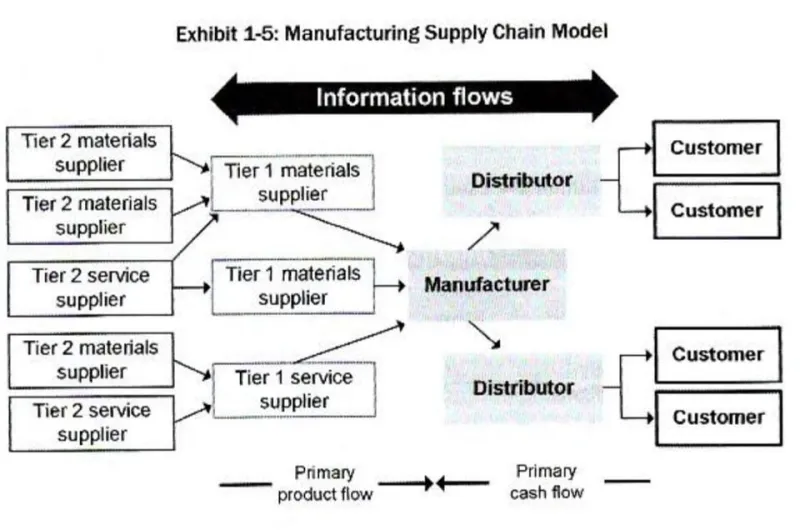
Today, a quiet but deliberate shift is underway among a subset of American industrial and manufacturing firms. These companies are establishing what supply chain strategists increasingly call "dual-track" or "parallel pipeline" sourcing arrangements—maintaining their primary networks while simultaneously cultivating verified, relationship-based supplier capacity in a second geography. For a growing number of them, that second geography is Kazan.
Why Kazan, and Why Now
Kazan is not a name that appears frequently in American trade publications—which is precisely the point. The capital of Tatarstan sits at the intersection of European Russia and Central Asia, functioning as a commercial hub with industrial infrastructure, a technically educated workforce, and a regional government that has invested heavily in attracting international business engagement. Kazan's trade exhibition ecosystem, anchored by events that draw vendors and buyers from across the Volga region, Central Asia, and beyond, has become one of the more productive venues for American companies seeking to initiate supplier relationships in this corridor.
For procurement executives willing to look past the familiar names, Kazan offers something increasingly rare: genuine capacity that has not yet been priced for Western demand. That pricing advantage will not last indefinitely. But for companies that establish relationships now—through direct exhibition participation, trade missions, or structured sourcing visits—the early-mover benefit is measurable.
The Logic of Defensive Diversification
It is worth being precise about what dual-track sourcing actually means in practice. This is not a proposal to abandon existing supply chains. The American manufacturers pursuing this strategy are not pulling out of Vietnam, relocating away from Mexico, or severing contracts with long-standing Chinese component suppliers. They are doing something more calculated: they are building a second layer.
The strategic logic is straightforward. A company that sources exclusively from one region is fully exposed to whatever disruptions that region experiences—whether those disruptions take the form of tariff escalation, port congestion, regulatory change, currency swings, or political friction. A company that maintains active, verified relationships with suppliers in a second geography has choices. It can shift volume incrementally, accelerate orders from the backup network during a disruption, or use the existence of a credible alternative to negotiate more favorable terms with its primary suppliers.
This is not theoretical hedging. It is the same logic that governs financial portfolio construction, applied to physical supply chains. Diversification reduces variance. Reduced variance protects margins.
What "Active Relationships" Actually Requires
The critical distinction in this strategy is between nominal diversification and genuine optionality. Many American companies have supplier lists that include vendors from multiple continents. Far fewer have the kind of verified, relationship-grounded partnerships that can actually be activated under pressure.
Building real capacity in Kazan requires more than adding a vendor to a database. It requires face-to-face engagement, quality verification, payment and logistics testing, and the kind of mutual familiarity that allows both parties to move quickly when circumstances demand it. This is precisely where Kazan's trade exhibition calendar becomes operationally relevant. Exhibitions provide a structured environment for American procurement teams to meet multiple potential suppliers in compressed timeframes, conduct preliminary due diligence, and initiate the relationship-building process that transforms a contact into a dependable partner.
Companies that have participated in Kazan trade events consistently report that the quality of supplier engagement differs meaningfully from cold outreach or directory-based sourcing. The exhibition context creates a level of mutual accountability—vendors who appear at credentialed trade shows have already cleared a basic threshold of seriousness—and the in-person dynamic accelerates trust-building in ways that remote communication rarely replicates.
Tariff Exposure and the Case for Preemptive Action
American trade policy has grown less predictable over the past several years, and there is little reason to expect that trend to reverse. Tariff schedules that appeared settled have been reopened. Categories that seemed exempt have been reclassified. Companies that built their cost models around a specific duty structure have found themselves repricing mid-contract.
For manufacturers whose margins are sensitive to input costs, this unpredictability is not merely an inconvenience—it is a structural risk. Kazan-based sourcing, for certain categories of industrial components, materials, and manufactured goods, sits outside the tariff frameworks that currently govern American trade with China and several Southeast Asian markets. This is not a permanent condition, and it is not a reason to make sourcing decisions based solely on current duty rates. But it is a factor that belongs in any honest analysis of supply chain risk.
More importantly, the time required to build a functional secondary supply chain—to identify vendors, verify quality, negotiate terms, establish logistics pathways, and develop the working relationships that allow for rapid response—is measured in months, not days. Companies that begin this process now will have operational capacity when the next disruption arrives. Companies that wait until a disruption is already underway will find themselves competing for the same supplier relationships under considerably less favorable conditions.
The Exhibition as a Strategic Entry Point
For American manufacturers who have not previously engaged with the Kazan market, the practical question is how to begin. The answer, for most companies, is through direct participation in Kazan's trade exhibition ecosystem. These events function as concentrated markets for supplier discovery, allowing procurement teams to evaluate multiple vendors across a range of categories within a single engagement.
The ExpoKazan platform exists specifically to connect American businesses with this ecosystem—providing advance intelligence on upcoming events, exhibitor profiles, and the logistical and compliance framework that allows American companies to participate effectively. For companies at the early stages of evaluating Kazan as a sourcing geography, exhibition participation offers a low-commitment, high-information entry point that is difficult to replicate through any other channel.
The Window Is Open — For Now
There is a version of this article that will be written in three years, after dual-track sourcing through Kazan has become standard practice among American industrial firms. That version will describe how early movers locked in favorable supplier terms, built relationships that proved invaluable during the next disruption, and arrived at negotiations with credible alternatives that their competitors lacked.
The companies that will appear in that future account are, in many cases, already acting. They are attending exhibitions, qualifying vendors, and building the parallel pipelines that will define their supply chain resilience for the next decade.
The competitive advantage in supply chain strategy has rarely come from doing what everyone else is doing, at the same time everyone else is doing it. It has come from identifying what is about to become essential—and building it first.