Dollar Discipline Is Draining American Profits: The Case for Embracing Ruble-Denominated Contracts in Kazan
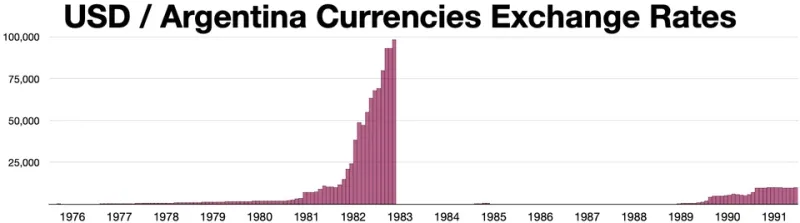
Photo: Wikideas1, CC0, via Wikimedia Commons
For decades, the unspoken rule governing American international commerce has been simple: price everything in dollars, settle everything in dollars, and let the counterparty absorb whatever currency inconvenience that creates. It is a posture born of genuine logic — the US dollar remains the world's reserve currency, and denominating contracts in it reduces a certain class of uncertainty for American treasury teams.
But in Kazan's trade exhibition ecosystem, that posture is increasingly functioning less like prudent risk management and more like a self-imposed tax. American firms that insist on dollar-only contract structures are, in many documented cases, paying meaningfully more than their European and Asian counterparts for identical goods, services, and supply arrangements — and most of them do not realize it.
The Friction Nobody Talks About
When an American company approaches a Kazan-based supplier and demands USD pricing, several things happen simultaneously — none of them favorable to the American buyer.
First, the Kazan supplier must now build a currency conversion buffer into the quoted price. That supplier's operational costs — labor, raw materials, logistics, overhead — are denominated in rubles. When they quote in dollars, they are effectively offering a forward contract on the exchange rate, and they price that risk conservatively. Industry observers familiar with Volga-region manufacturing consistently note that this embedded buffer runs between 4 and 9 percent above what the same supplier would charge in a ruble-denominated arrangement.
Second, the supplier's own bank charges conversion fees when receiving dollar payments. Those fees — typically 1 to 3 percent depending on transaction volume and banking relationship — are not absorbed charitably. They migrate upstream into the quoted price.
Third, and perhaps most consequentially, dollar-insistent buyers signal a certain inflexibility to their Kazan counterparts. In a relationship-oriented commercial culture, that signal carries weight. It communicates that the American party prioritizes its own administrative convenience over the partnership itself — a subtle but real impediment to the deeper commercial cooperation that produces the most favorable long-term pricing.
What the Numbers Actually Show
Three illustrative cases, drawn from companies that have participated in Kazan-area trade events, illuminate the cost differential clearly.
A mid-sized Ohio-based industrial components importer spent two years sourcing from a Tatarstan manufacturer under a USD-denominated master supply agreement. When a competing German buyer entered negotiations with the same supplier and proposed ruble settlement, the German firm secured a unit price approximately 11 percent below what the American company was paying. The Ohio importer's procurement director, upon learning of the disparity, initially attributed it to volume differences. A subsequent audit revealed that volume was only a minor factor. The structural pricing difference was almost entirely attributable to currency arrangement.
A Texas-based agricultural technology firm exhibiting at a Kazan trade exposition negotiated a distribution partnership in dollars, as was standard practice for their international contracts. Eighteen months later, a Turkish distributor pursuing a parallel arrangement with the same Kazan partner negotiated in rubles and received preferential inventory allocation during a supply-constrained period. The American firm, despite a longer relationship, was treated as a secondary priority — a dynamic their Kazan contact later explained, candidly, as reflecting the administrative simplicity the Turkish arrangement afforded.
A Pacific Northwest specialty chemicals company, advised by a trade consultant with deep Kazan market experience, structured its initial supplier agreement in a ruble-linked hybrid — dollar invoicing with ruble-indexed pricing adjustments. The resulting effective cost over a 24-month period came in 8.3 percent below the dollar-fixed alternative the company had originally proposed. The treasury team's initial discomfort with the arrangement evaporated within two quarters.
The Risk Management Misunderstanding
The standard objection from American CFOs and treasury officers runs as follows: ruble exposure introduces volatility that cannot be justified to boards or investors. The ruble's historical fluctuations — particularly during periods of geopolitical stress — make it an unsuitable basis for commercial commitments.
This objection, while not without foundation, misrepresents the actual risk landscape facing most American companies engaged in Kazan trade relationships.
For a company sourcing $2 million annually from Kazan suppliers, the relevant question is not whether the ruble is volatile in absolute terms. The relevant question is whether the cost of hedging ruble exposure is greater or lesser than the cost premium embedded in dollar-denominated pricing from the same suppliers. In the majority of documented cases, it is not. A standard 12-month ruble forward contract, priced through any major US bank with emerging market currency capabilities, typically costs between 2 and 4 percent of notional value. Against an 8 to 15 percent structural pricing advantage, that hedge cost represents a strongly favorable trade.
Beyond forwards, American companies have access to ruble-denominated options, cross-currency swaps, and natural hedging strategies that involve matching ruble-priced purchases against ruble-priced sales in third markets. For companies with any existing exposure to Central Asian or Russian-adjacent revenue streams, natural hedging opportunities are frequently underexplored.
What Sophisticated American Buyers Are Doing Differently
The companies extracting the greatest commercial value from Kazan trade relationships share a common financial posture: they treat currency flexibility as a negotiating asset rather than a liability to be avoided.
In practical terms, this means arriving at Kazan exhibitions with pre-approved authority to discuss ruble-linked pricing structures. It means having a relationship with a US bank or specialized currency broker who can execute ruble hedges on short notice — ideally before the ink dries on a letter of intent. And it means briefing internal stakeholders in advance, so that a ruble-denominated proposal does not trigger a weeks-long internal review process that kills deal momentum.
Some American companies have gone further, establishing dedicated ruble reserve accounts funded through periodic purchases during favorable exchange rate windows. This approach, while requiring more treasury sophistication, allows those companies to present themselves to Kazan suppliers as effectively domestic counterparties — eliminating the currency premium almost entirely.
The Kazan Exhibition as a Currency Strategy Laboratory
There is a practical reason why Kazan trade events represent an ideal environment in which to test and refine ruble engagement strategies. The concentration of Tatarstan-based and broader Volga-region suppliers at major Kazan exhibitions means that a single event can generate enough competitive supplier conversations to benchmark ruble versus dollar pricing across multiple categories simultaneously.
American buyers who approach these exhibitions with explicit currency flexibility as part of their negotiating mandate consistently report that it generates immediate goodwill and accelerates deal progression. Suppliers who have grown accustomed to the administrative friction of dollar settlement visibly respond to a counterparty willing to engage on their terms.
The companies winning the most favorable supply arrangements in Kazan are not necessarily the largest, nor the most established. They are, increasingly, the ones whose treasury teams have done the homework — and whose executives arrive at the negotiating table prepared to treat currency not as a constraint, but as a tool.
For American firms still defaulting to dollar-only mandates, the competitive cost is real, measurable, and growing. The question is no longer whether ruble flexibility creates value. The question is how much longer it makes sense to leave that value on the table.