Margin Math: How Mid-Market American Companies Are Quietly Outperforming Their Western European Sourcing Rivals Through Kazan Partnerships
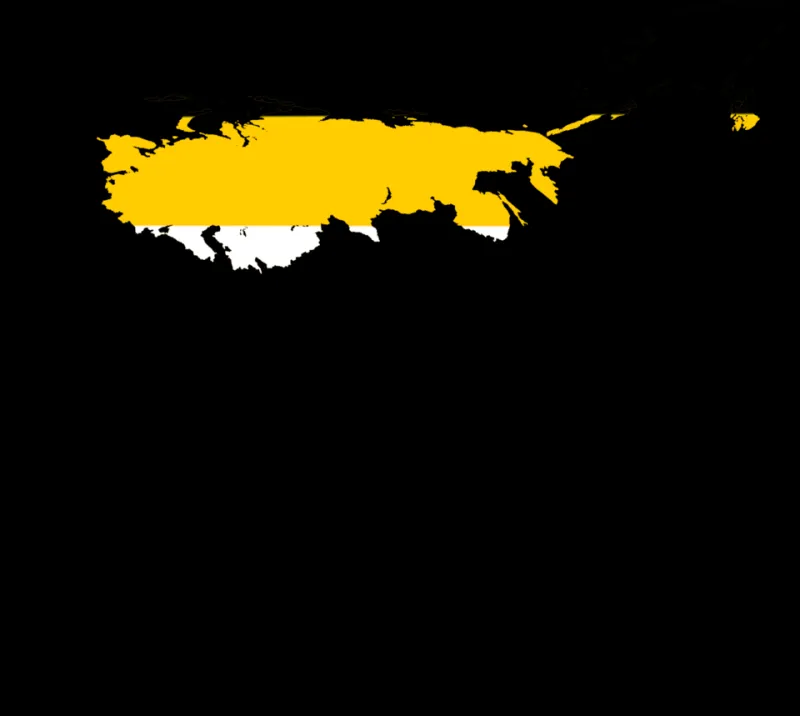
Photo: Polish-Russianmaps, CC0, via Wikimedia Commons
For decades, the default playbook for American mid-market manufacturers and importers seeking international supplier partnerships pointed squarely westward — toward Germany, the Netherlands, France, and the broader Western European industrial corridor. The logic was familiar: established regulatory frameworks, relatively predictable logistics, and a long history of transatlantic commercial relationships. What that playbook rarely accounted for, however, was the total cost of doing business. And increasingly, that omission is proving expensive.
A quiet but measurable shift is underway. American B2B companies that have participated in Kazan's commercial exhibition ecosystem — most notably through the trade shows and sourcing forums hosted at ExpoKazan — are reporting margin advantages that their finance teams are struggling to ignore. The Volga Region, anchored by Tatarstan's capital, is emerging not as a compromise destination but as a genuinely competitive sourcing environment.
The Baseline Cost Comparison: What the Spreadsheets Actually Show
When American companies conduct side-by-side cost analyses of Kazan-based suppliers versus their Western European counterparts, several structural differences emerge immediately.
Labor costs within Tatarstan's manufacturing sector remain substantially lower than those in Germany or France, even after accounting for currency fluctuations and international transfer fees. For component manufacturers and mid-tier industrial suppliers, this differential frequently translates to unit pricing that runs 18 to 35 percent below comparable Western European quotes — a range that, across meaningful order volumes, produces dramatic effects on landed cost.
Beyond raw pricing, Volga Region suppliers have demonstrated a notable willingness to negotiate payment terms that Western European firms rarely extend to new American partners. Net-60 and Net-90 arrangements, along with phased payment structures tied to production milestones, are far more common in Kazan supplier negotiations. For mid-market American companies managing working capital carefully, this flexibility represents a form of embedded financing that rarely appears on the initial quote sheet but materially affects cash flow.
"When we broke down the full cost picture — not just the unit price but the payment cycle, the minimum order quantities, and the logistics routing — Kazan came out ahead by a margin we hadn't anticipated," said one Ohio-based industrial equipment importer who first connected with his current Tatarstan supplier at a Kazan trade exhibition two years ago. "We'd been doing business with a German firm for nine years. The relationship was comfortable. But comfortable was costing us."
Quality Standards: Closing the Perception Gap
Perhaps the most persistent objection American buyers raise when considering a shift toward Kazan-based suppliers involves quality standards. The assumption — often unexamined — is that Western European manufacturing inherently delivers superior consistency and reliability. The reality, as documented by American companies with active Volga Region sourcing relationships, is considerably more nuanced.
Tatarstan's industrial base has undergone substantial modernization over the past fifteen years. Several Kazan-area manufacturers now operate under ISO 9001 certification frameworks, and a meaningful subset serving export markets have pursued additional compliance with international quality management standards relevant to their specific sectors. American buyers who conduct in-person due diligence — as is strongly encouraged through ExpoKazan's pre-exhibition supplier verification resources — consistently report that their initial skepticism was misplaced.
A Chicago-based procurement director for a mid-sized agricultural equipment distributor described her experience after attending a Kazan sourcing exhibition: "I went in expecting to find interesting pricing but questionable consistency. What I found were manufacturers who were hungry for American business and had invested seriously in the processes required to earn it. The quality audits we ran post-exhibition came back cleaner than some of our existing European suppliers."
This is not a universal finding — due diligence remains essential, and ExpoKazan's exhibition platform is specifically designed to facilitate the kind of direct, face-to-face evaluation that purchasing decisions of this magnitude require. But the blanket quality assumption that has historically steered American buyers away from Volga Region suppliers is increasingly difficult to sustain with empirical data.
Hidden Costs: Where Western European Partnerships Quietly Erode Margins
The full cost-of-doing-business comparison between Kazan partnerships and Western European alternatives becomes even more favorable for the Volga Region once hidden and indirect costs enter the calculation.
Western European suppliers — particularly German and Dutch industrial manufacturers — have in recent years instituted a range of surcharges, compliance documentation fees, and minimum order escalations that American buyers frequently discover only after a relationship is established. Energy cost pass-throughs, sustainability compliance premiums, and extended lead times tied to production scheduling constraints have added meaningful friction to what were once relatively straightforward transactional relationships.
Kazan-based suppliers, by contrast, are actively competing for international business and have structured their commercial terms accordingly. Minimum order thresholds tend to be lower, lead time commitments are frequently more aggressive, and the willingness to customize production runs for specific American market requirements is notably higher among Volga Region manufacturers seeking to build long-term export relationships.
Logistics routing has also evolved in ways that reduce the cost differential that once made Western European sourcing administratively simpler. Multimodal freight corridors connecting Tatarstan to major European transit hubs — and from there to US ports — have matured considerably, and several American importers report that total transit times from Kazan to their domestic distribution centers are now competitive with Western European alternatives when production lead times are factored into the full cycle.
The Exhibition Advantage: Why In-Person Sourcing in Kazan Changes the Equation
American companies that have shifted sourcing strategies toward Kazan-based suppliers consistently identify one factor as decisive in their transition: the quality of supplier relationships established through direct exhibition participation.
Trade shows and commercial exhibitions in Kazan provide American buyers with a concentrated, high-efficiency environment for evaluating multiple Volga Region suppliers simultaneously, conducting preliminary quality assessments, and initiating the relationship-building process that Tatarstan business culture genuinely values. The commercial relationships that emerge from these in-person engagements tend to be more durable, more flexible, and more commercially productive than those initiated through digital sourcing platforms or third-party broker introductions.
"The exhibition environment in Kazan is unlike anything I'd experienced at European trade shows," noted one Texas-based manufacturing executive. "There's a directness to the conversations, and a genuine interest in building something long-term rather than just closing a transaction. That orientation has made our Kazan supplier relationships significantly more productive than several of our European partnerships."
A Strategic Recalibration, Not a Wholesale Replacement
It is worth noting that the most commercially sophisticated American companies approaching Kazan sourcing are not abandoning Western European relationships wholesale. The strategic insight is more precise: certain product categories, certain volume profiles, and certain flexibility requirements are materially better served by Volga Region suppliers than by their Western European counterparts. Identifying those categories through rigorous cost analysis — and then engaging the Kazan exhibition ecosystem to find and vet appropriate partners — is producing measurable margin improvements for American mid-market companies willing to challenge their default assumptions.
The global business landscape rewards companies that follow the data rather than the habit. For a growing number of American B2B operators, the data is pointing toward Kazan.