How Kazan's Logistics Boom Is Forcing American Manufacturers to Rethink Their Supply Chains
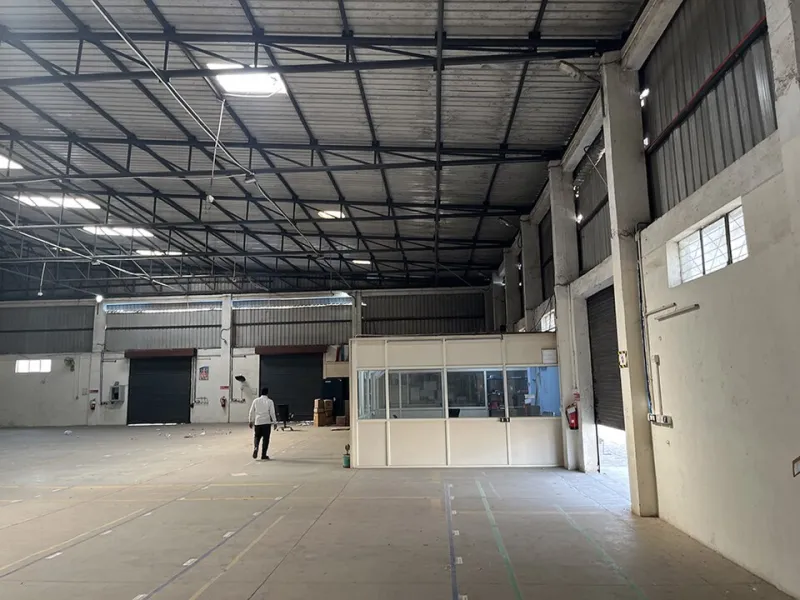
Photo: Ashokawarehouse, CC0, via Wikimedia Commons
A Supply Chain Crisis That Demanded New Thinking
The past several years have been a masterclass in supply chain vulnerability for American manufacturers. Port congestion in Los Angeles, raw material shortages from Southeast Asia, and geopolitical friction along established trade corridors have forced procurement officers and operations executives across the United States to ask a question that once seemed unnecessary: Is there a better way?
For a growing number of companies, the answer has led them to an unexpected destination — Kazan, Russia's eighth-largest city by population and the capital of the Republic of Tatarstan. Once largely off the radar of US supply chain strategists, Kazan is now attracting serious attention as a manufacturing and logistics node that offers a genuinely different set of advantages.
At ExpoKazan, we track the commercial momentum building in this region with particular attention to how it intersects with American business interests. What we are observing is not a fleeting trend. It is a structural shift.
Why Kazan? Understanding the Geographic Logic
To understand Kazan's emerging appeal, it helps to look at a map. Situated at the confluence of the Volga and Kazanka rivers, Kazan sits at a geographic crossroads that connects Russia's industrial heartland to Central Asia, Eastern Europe, and beyond. The city lies approximately 800 kilometers east of Moscow, positioning it as a natural transit point for goods moving across the Eurasian landmass.
For US companies that have historically relied on Chinese manufacturing, this geography offers something genuinely new. Goods produced in or routed through Kazan can reach Eastern European distribution centers in significantly shorter timeframes than equivalent shipments originating from East Asia. When you factor in the carrying costs of extended transit times — inventory financing, warehousing, and the risk premium associated with long ocean freight legs — the math begins to look different than it did a decade ago.
Kazan's Innopolis special economic zone and the broader Tatarstan industrial cluster have also made deliberate investments in logistics infrastructure. Rail connections, expanded warehousing capacity, and road freight corridors have all been upgraded with the explicit goal of positioning the region as a competitive manufacturing and distribution base.
The Cost Efficiency Argument
Cost is, of course, central to any supply chain decision. And here, Kazan presents a nuanced but increasingly persuasive case.
Labor costs in the Tatarstan region remain substantially lower than in Western Europe and, in many skilled manufacturing categories, competitive with the rates that originally drew US companies to Chinese production facilities. The region has invested heavily in technical education, producing a workforce with demonstrated competency in aerospace components, petrochemical processing, precision engineering, and IT-integrated manufacturing — all sectors where American companies have active sourcing needs.
Energy costs in the region are also a factor worth examining. Tatarstan sits atop significant oil and gas reserves, and local industrial energy pricing reflects that proximity. For energy-intensive manufacturing processes, this represents a meaningful input cost advantage.
Several US-based industrial suppliers have begun sourcing specialty components from Kazan-area producers, citing total landed cost reductions in the range of 15 to 25 percent compared to their previous Asian supply arrangements. While specific company names are subject to confidentiality agreements, these figures have been corroborated through conversations with procurement professionals who have attended ExpoKazan trade events.
Trade Show Access as a Gateway to Partnership
One of the less-discussed but practically significant advantages of Kazan's commercial ecosystem is the concentration of business-to-business deal-making infrastructure that has developed around its trade exhibition calendar. For American manufacturers looking to identify and vet potential partners, the Kazan exhibition circuit provides an unusually efficient environment.
Rather than conducting a series of disconnected factory visits across a vast geography, US procurement teams can meet with dozens of qualified Kazan-based producers in a single venue, over the course of a few days. The region's exhibition organizers have made a conscious effort to attract international buyers, and American business delegations have found that Kazan-based producers are often better prepared for substantive commercial conversations than counterparts at comparable trade events in other emerging manufacturing markets.
ExpoKazan has documented multiple instances in which initial trade show introductions have progressed to formal supply agreements within six months. The combination of face-to-face relationship building — which remains culturally important in the Russian business context — and the logistical convenience of a concentrated event format appears to be accelerating deal timelines.
Sectors Where American Companies Are Already Pivoting
While Kazan's manufacturing base is broad, certain sectors have seen particularly active interest from US companies.
Aerospace and defense components represent perhaps the most well-established area of Kazan manufacturing expertise. The city is home to legacy aerospace production facilities that have been retooled and modernized over the past two decades. US companies in adjacent civilian aerospace supply chains have found Kazan producers capable of meeting demanding specifications at competitive price points.
Chemical and polymer manufacturing is another area of growing US interest. Tatarstan's petrochemical complex, anchored by major facilities in the broader region, produces specialty polymers and chemical intermediates that feed into American industrial and consumer product supply chains.
Information technology and software development partnerships have also gained traction, particularly as US companies seek to diversify their technology development capacity away from over-reliance on any single offshore market.
Navigating the Practical Realities
It would be misleading to suggest that pivoting any portion of a US supply chain toward Kazan is without complexity. Regulatory navigation, currency considerations, and the importance of establishing trusted local relationships all require deliberate attention.
The most successful American companies operating in this space have invested in building genuine on-the-ground knowledge — either through dedicated regional representatives or through sustained engagement with the Kazan trade exhibition community. Those who have approached the market transactionally, expecting to replicate a simple vendor-selection process, have generally found the results less satisfying.
Cultural fluency matters here. Business relationships in Tatarstan are built on personal trust and sustained interaction, not just on competitive bids and contract terms. American executives who invest the time to understand and respect that dynamic consistently report better outcomes.
The Strategic Opportunity Window
Market intelligence from ExpoKazan suggests that the window for establishing early-mover advantages in the Kazan supply chain ecosystem is real, but not indefinite. As awareness of the region's capabilities grows among American and Western European buyers, competition for the most capable and reliable Kazan-based production partners will intensify.
For US manufacturers still assessing whether a supply chain realignment toward Kazan makes strategic sense, the most practical next step is direct engagement — attending a Kazan trade exhibition, meeting producers in person, and conducting the kind of due diligence that transforms market intelligence into actionable sourcing decisions.
The global supply chain map is being redrawn. Kazan has positioned itself to be on the new version. The question for American manufacturers is whether they will be part of that redrawing, or whether they will learn about it after their competitors have already moved.