Kazan's 2026 Trade Calendar, Audited: Where American Vendors Can Still Move
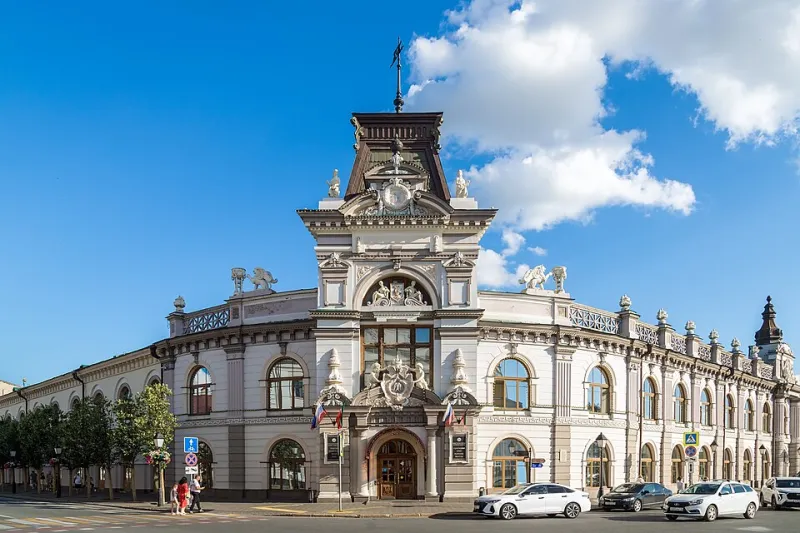
Photo: Mike1979 Russia, CC BY-SA 3.0, via Wikimedia Commons
Kazan's exhibition year is not a single season. It is a sequence of sector-specific windows, each with its own buyer profile, booth economics, and follow-up rhythm. A guide written on 17 November 2026 has to do two things at once: account for the months American vendors have already moved through and identify the remaining weeks that can still produce signed business before the 2027 cycle begins. The month-by-month view below is therefore an audit as much as a calendar. Dates shift, organizers revise floor plans, and sector overlaps change; vendors should confirm final schedules with exhibition organizers before committing travel or booth deposits.
January-February: The Planning Window
January is rarely a headline month on the Kazan exhibition calendar. It is the month when serious American vendors set their booth budget, book interpreters, map distributor targets, and complete the product documentation that Russian buyers will request. February brings the first construction, building-materials, and industrial-equipment events of the year. For US suppliers of HVAC systems, insulation, tools, and light industrial components, this is a useful low-competition window. A small booth in a shared pavilion is usually enough; the objective is not visibility but a short list of qualified contractors and distributors.
March-April: Food, Agriculture, and the Spring Buying Cycle
Spring shifts the focus toward food processing, agriculture, packaging, and shelf-stable consumer goods. American brands in ingredients, sauces, snacks, and food-service equipment should treat March and April as a scouting period. Halal buyers are also active in this window, which makes it a practical first step for brands that need to test certification and labeling requirements before committing to a larger food exhibition later in the year. Follow-up must begin within 72 hours; leads that sit for a week rarely convert.
May-June: Policy, Energy, and the Forum Effect
May is forum season in Kazan. Policy-adjacent business events draw regional officials, state-linked buyers, and large industrial groups. These are not pure trade shows, and American vendors should not judge them by booth traffic alone. The value lies in pre-arranged meetings and in reading the direction of regional investment. June tends to favor energy, petrochemical, and industrial-services suppliers. Companies selling safety equipment, environmental services, pumps, valves, and maintenance solutions can use this period to meet decision-makers who are difficult to reach through cold outreach.
July-August: Logistics, Transport, and the Summer Test
Summer is slower for broad consumer exhibitions but not for logistics, warehousing, transport, and cold-chain events. American firms in supply-chain software, packaging, and refrigeration should use July and August to test smaller regional events. The risk is overcommitting to a low-traffic show because the dates are convenient. The test is simple: ask organizers for the buyer profile of the last two editions, not the total visitor count.
September-October: Technology, Innovation, and Peak Visibility
September and October are the high-visibility months. Technology, digital services, industrial subcontracting, and innovation events attract the largest audiences and the most competition for attention. American vendors should book space early and budget for meeting scheduling, not just booth construction. A modest booth in a strong sector zone will outperform a large booth in a peripheral hall. October is also when industrial buyers begin setting budgets for the following year, which makes it a good month for longer sales conversations.
November-December: The Remaining 2026 Window
As of mid-November, the remaining calendar is narrower but still useful. Food, halal, personal-care, and regional consumer-goods events can connect American brands with distributors before the year closes. December is not a major show month in Kazan; it is a follow-up and contracting month. Vendors should use it to close pending distributor agreements, reserve shared-pavilion space for 2027, and document which 2026 events produced qualified meetings rather than business cards.
What the 2026 Calendar Teaches for 2027
The clearest lesson from the 2026 cycle is that Kazan rewards a two-tier calendar. Tier one is a small number of sector-aligned exhibitions where the company commits real meeting time. Tier two is a set of low-cost scouting visits, shared pavilions, or distributor-led meetings that test new categories without a heavy booth investment. American vendors should avoid events that lack a defined buyer profile, even if the venue is impressive. The calendar is a tool for allocating attention, not a scorecard of prestige. In Kazan, the best exhibition is the one that produces a qualified follow-up conversation within a week.